
What They Learned From Their Teammates
Chapter 11 of The College Golf Report.
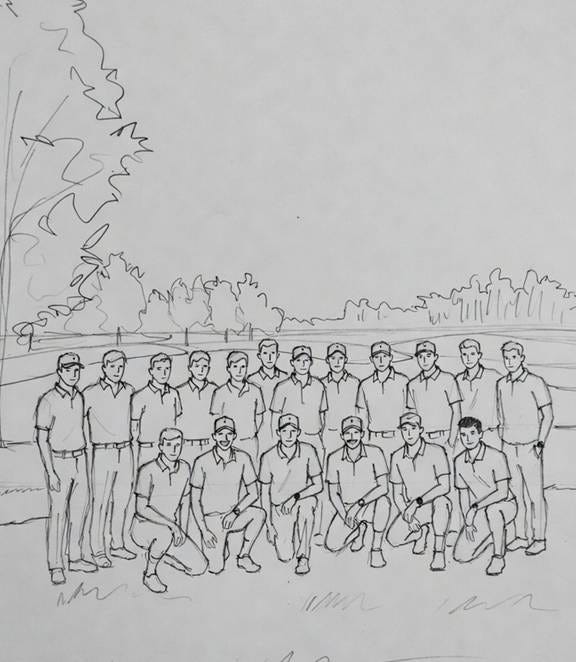
Not every lesson comes from a coach or a swing instructor. Some come from the people grinding next to you every day.
• • •
“Golf is what I do, not who I am.”
A former college golfer wrote that when I asked about the best piece of advice they ever got from a teammate - from someone living the same week they were. It stuck with them, and reading it stuck with me.
I asked 133 former college golfers two questions about their teammates.
What’s the best piece of advice you received from one? And think about the best player on your team - what made them the best?
The answers turned out to be one of the more revealing parts of the survey, because they show what players actually learn from each other when the coaches aren’t in the room.
If you’re new here, this is week 11 of a free, weekly walkthrough of a survey of 133 former college golfers.
The Numbers
I asked players to rate one statement on a 1 to 5 scale: “My teammates positively impacted my golf game.”
· Average rating: 4.2 / 5 (N = 133)
· Distribution: 5 = 53%, 4 = 32%, 3 = 12%, 2 = 2%, 1 = 1%
85% rated their teammates’ impact a 4 or 5. Only 3% disagreed. That makes it one of the highest-rated factors in the entire survey. Teammates had a massive impact on most former college golfers.
The number surprised me less the more I read the open answers. Players credited teammates for the daily standard, the perspective, and the things a coach is rarely positioned to say. Four years in a team room leaves a mark that outlasts the scoring average.
The Best Teammate Advice
When I asked what advice from a teammate actually stuck, the responses clustered around a handful of themes. What’s striking is how little of it is technical. Most of it is about how to think.
On Perspective
The single most common piece of advice was some version of: stop taking it so seriously.
“It’s just a game.”
“Golf is what I do, not who I am.”
“Golf doesn’t define you, allow yourself to have fun.”
“You are not what you shoot.”
“A senior told me my freshman year I needed to stop taking everything overly seriously. That took a while for it to register with me, but in my specific case he was right.”
“Take a nap. I’m being serious. Sometimes you need a break, a snack, some fresh air without the game and it will help perspective.”
On Trust and Confidence
“You’re a great player if you’re here. Don’t doubt yourself.”
“To believe in my game and to play with a chip on my shoulder.”
“Confidence is free.”
“Never stop believing in myself, and no matter how hard you work, you may not always see results. But oftentimes it all clicks at once and you just have to be patient and diligent because that time is coming. You just don’t know when.”
“Just remember you have to believe you are the best player in the field today.”
“Trust yourself” came up over and over, from different players who’d never met.
On Keeping It Simple
“Don’t over complicate things.”
“Sweat the small stuff: it always solves the big stuff.”
“If you’re working on something/changing something, don’t look at what the ball is doing, focus on what you’re working on and what you can control.”
“Just putt the ball.” (One player added: very simple, but I had the putting yips for a bit when I got to college and this helped me get over it.)
On Playing Your Own Game
“Hit your shot, not someone else.”
“Why don’t you just hit that draw that you’re comfortable with every time? It won’t allow you to fire at every flag, but that’s OK. You’ll get plenty of opportunities.”
“You are your own boss. In college, coaches are there to help but it’s also important to decide about the information you receive. You are your own boss.”
“Do your thing sometimes. Can’t listen to everything coaches say.”
On Course Management
“Develop a fairway finder shot. Find a way to get it around when you aren’t swinging well.”
“Learning how to play away from trouble in certain instances, playing for par/bogey.”
“Have a consistent miss.”
“Easier to score in the fairway.”
On How to Practice
“Plan out each day. So you can leave the course no matter how long you spent there knowing you did what you needed to do.”
“Play as much as you can, when it comes to practice its better to play instead of aimlessly hitting hundreds of balls.”
“The NCAA practice hours are short, you need to do more than your coach asks of you.”
“Being at the golf course for 8 hours is not good if you are not diligently working. You can achieve everything you need in under 4.5 hours.”
What Didn’t Help
Not every team was a classroom. Some of the most honest answers were the ones that had nothing to report.
“Can’t recall any advice from a teammate that stuck with me.”
“Our group was very individualistic, there weren’t much transfer of knowledge. During my junior and senior year the group got along quite well, we competed a lot and were good friends off the course, but we didn’t utilize each other’s resources or competence much. It was a rather protective and immature culture unfortunately.”
What Made the Best Players the Best
The second question asked players to describe the best player they competed with every day. The patterns were remarkably consistent.
Ball Striking and Consistency
“Henrik Lilja was the best ballstriker I have ever seen. The one thing he did really well was not search for something new but did what he was already doing really well.”
“Chris Gotterup. He was the best driver of the golf ball I’ve ever seen. Not only was he super long, but he never hit it in a position where he didn’t have a shot into the green.”
“So consistent (high floor). Bad rounds didn’t shoot himself out of the tournament.”
Ball striking was the single most-mentioned trait. The best players hit it straight, hit it consistently, and didn’t beat themselves.
Confidence and a Quiet Mind
“Playing without fear, trusting in their ability.”
“Our best player my sophomore year was a freshman. What stood out to me was his carelessness and guts. He played like a kid, no fear or consequence thinking. I think this is what made him good.”
“They didn’t overthink anything.”
“They believed in themselves more than anyone else.”
Work Ethic Matched With Smart Practice
“He was the hardest worker I’ve ever seen. He was the first to practice and the last to leave most days.”
“Knew exactly what they needed to work on and how to work on it. Very efficient with practice and never had bad self talk.”
“They understood their game and they weren’t distracted by the noise (new swing theories, training aides, bad shots, etc.). They figured out what worked for them and got really good at it and detached from the results.”
Love of the Game and Competitiveness
“Keefer was the best because he loved getting to play golf. It was never a chore, it was always like a kid going to a candy store.”
“He was obsessed with golf. He just loved putting, hitting just loved it.”
“His competitiveness is unearthly. He wants to win at everything. He is a killer.”
Short Game
“Great putter/short game to go with the great ball striking. Very well rounded game.”
“He knew how to score, he was a grinder, he never gave up. His short game was incredible.”
The Team Culture Factor
A few answers got at why some teams produced this kind of learning and others didn’t.
“Me and one teammate practiced all the time together and pushed each other. We bounced ideas off each other since the coaches weren’t much help.”
“Playing practice rounds with players that have already played that tournament course before was incredibly insightful. The amount they knew about the course and how to score/play it correctly was brilliant.”
“It was an attitude we had as a group and not a singular piece of advice - cultivated from day 1. Underdog mentality and embracing that we would take on anyone.”
• • •
Subscribe for free to get the next chapter (Letters to Your 21-Year-Old Self) in your inbox, along with the rest of the series.
Next chapter: Letters to Your 21-Year-Old Self - what these players would tell themselves at the end of the college road, looking back from the other side.
If this one was useful, share it with the junior golfer or parent who needs it.
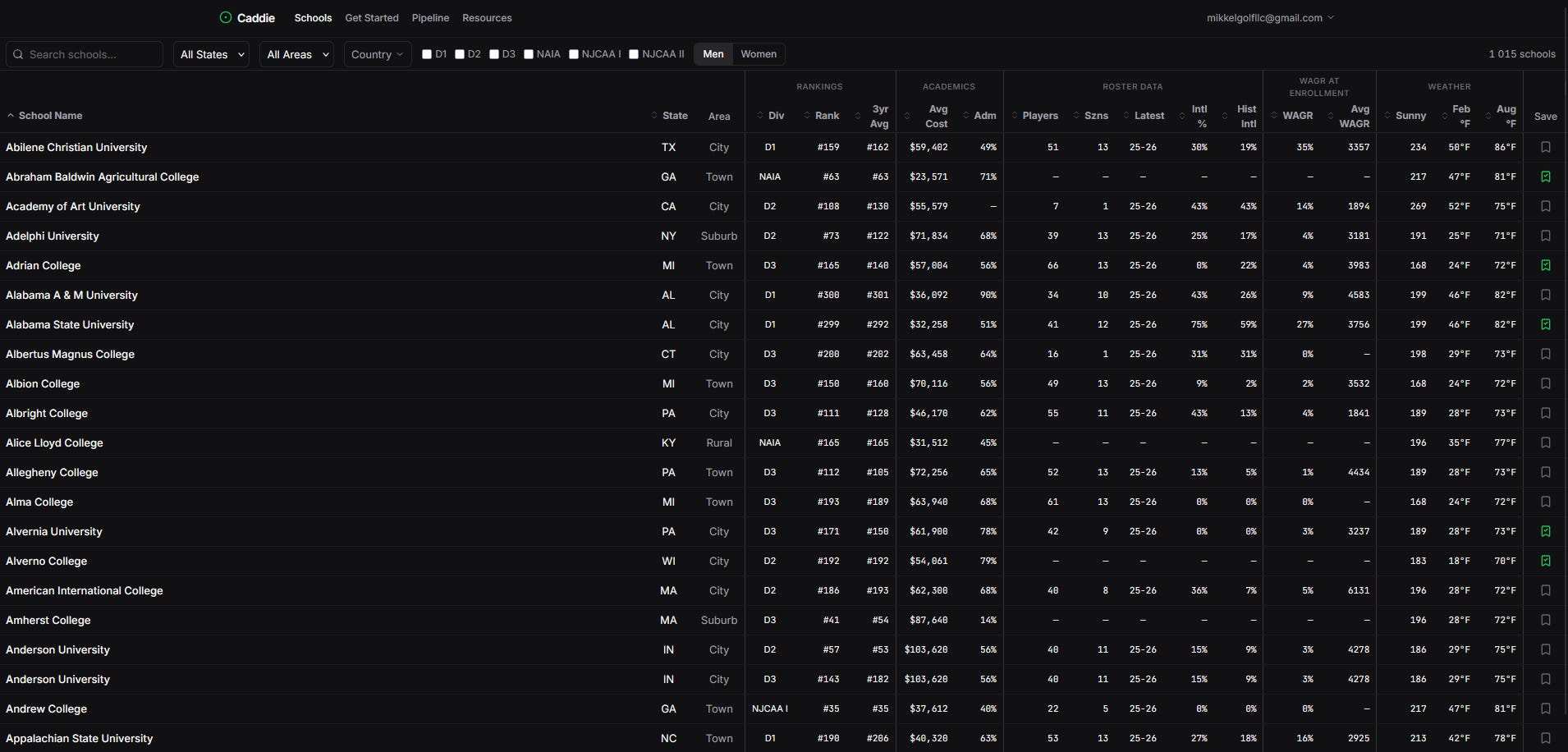
If you’re a family navigating the recruiting process right now, I also built CADDIE:
https://caddie.mikkelgolf.com
A complete recruiting system for you to own your recruitment - reviewed by me.
Mikkel Bjerch-Andresen
Golf coach, data analyst, writer