
Open-Ended Recruiting Advice from 133 Former College Golfers
The College Golf Report Chapter 2
“Don‘t choose a brand/name over the place you‘d rather go just because it‘s a bigger school.”
I asked 133 former college golfers one simple question:
“Do you have any open-ended recruiting advice for junior golfers?”
Their answers reveal what they wish they‘d known, what they got wrong, and what actually matters when choosing a school.

1. Find Where You‘ll Actually Play (Most Common)
The most repeated advice: choose a school where you‘ll compete, not sit.
“Go where you believe you can get better and go where you will play.”
“Go to a place where you get to play.”
“Go somewhere where you are going to be able to travel to tournaments more than not.”
“Choose a spot that combines playing time and opportunity to grow and learn. NOT a top spot where your time on the traveling team is limited just because the team is ranked high.”
“Your first years in college the most important part is to get playing time in order to develop. Signing with the best team could have you sit on the sidelines for two years.”
“Go somewhere where you know you are going to play regardless of what division.”
“Find a place where you will be challenged but make sure you will travel with the team.”
“Pick a team where you know you can play/make the lineup almost right away.”
“Be realistic about where you see yourself on that team as it relates to your golf/academic goals. There‘s no substitute for playing in competition.”
“You need to play tournaments to get better.”
“Find a place where you can actually make the starting lineup right away.”
2. The Coach Is Everything
Second most common theme: who you play for matters more than where you play.
“Who you play for will be the most important aspect. That will be your ‘dad’ for 4 years. It doesn‘t matter what division of golf it matters who is your coach.”
“Go somewhere that has a coach that can help you.”
“Coach is a big part of how you can progress as a player. Find the right fit.”
“Make sure the coach and you have a good relationship and that they have the best interest for you.”
“Make sure your head coach is someone you want to work for and with.”
“The right fit isn‘t just about the amount of scholarship. Find a coach you love and a school with your major. If you love the coach, the culture will most likely be good.”
“Have a clear idea of what YOU want. Ask coaches why they coach and ask about their core coaching philosophies.”
“Find a place and environment you will thrive in.”
“Coaches can change.” (Important caveat)
3. Find Your Fit, Not the Best Brand
Don‘t chase prestige. Chase the right environment for you.
“Find the fit for you, trying to fit yourself to the school rarely works.”
“Find the right fit for you, not the school logo you want to wear on your chest.”
“Go where your gut tells you. Don‘t choose a brand/name over the place you‘d rather go just because it‘s a bigger school.”
“Playing opportunities and relationships with teammates and coaches matter more than the school logo.”
“Don‘t be blinded by rankings and tournament schedule and trying to find the best school.”
“Pick a school where you‘d be happy despite what‘s going on with golf.”
“To find a place you would love even if game wasn‘t great.”
“A good program doesn‘t mean it has to be a big school. Many smaller programs have great teams.”
“Power 4 isn‘t everything.”
“Find a school that truly fits you, where you‘ll have the chance to grow as a person, step out of your comfort zone, and develop both on and off the course.”
—
4. Do Your Research
“Talk to people that have been there, don‘t ask the coaches.”
“Never rush with making decisions and fact check everything a coach might tell you.”
“Get to the truth. Coaches try to sell you with a lot of fluff that doesn‘t really matter.”
“Start early, talk to current or past players for advice or info about the school.”
“Do a visit, stay with team members. Don‘t fall for the sales pitch, dig deeper.”
“Be picky if you can and ask previous players! Those who are not still in the system might give you a more honest answer about the program and the coaches.”
“Talk to the players on the team currently. Seek out former players as well. Ask them about the bad parts. Ask them what they wish they would have known as recruits.”
“Make sure to do the research, list what‘s most important to you, check with players on current team or former team members to evaluate if the info you are getting during the recruiting process matches other players’ experiences and views.”
“Do your homework!!!”
“Do your research.”
“Go see a lot of schools and talk to a lot of coaches cuz I feel like everyone lies a little bit.”
5. Take Your Time
“Don‘t rush into a decision.”
“Take your time and get it right.”
“Make a decision on what‘s best for you. The more people you involve in that decision the more likely you are to end up at a place you don‘t want to be.”
“Don‘t stress! The right fit will come to you.”
“Take your time and make the decision that fits what you and your family need.”
“Take your time!”
“I‘d say do it well in advance. I started the process pretty late, so make sure you take your time.”
“Take your time and find your fit. Not your parents or friends fit. Do what‘s best for you and visit as many schools as you can.”
6. Visit Multiple Schools
“Go visit the schools and get to know the coaches, teammates, staff and the climate.”
“Take all your visits.”
“Take as many visits as you can.”
“Try to have good grades in school and go visit the schools you would like to go to.”
“Any school and every school more options the better go on as many visits as possible.”
“Take a visit/meet with coaches in person before committing somewhere.”
“If possible, meet the coach and players. Compare schools and trust your instincts.”
“If you have the opportunity to visit the schools that seem the most promising do so, you will learn a lot more and also learn more about the coaches as human beings.”
7. Ask Hard Questions
Don‘t be afraid to challenge the sales pitch.
“Ask all the questions you have, there are no stupid questions, it‘s the home you will have for the next years so be sure you know everything you need.”
“Ask questions and don‘t let coaches pressure you.”
“Ask as many questions as you can think of.”
“Ask many questions you find relevant.”
“Ask coaches hard and direct questions.”
“When visiting, ask the team members about positives/negatives.”
“Ask the hard questions to the coach regarding the group, goals for him and his players and how is he going to help you get there.”
“Spend as much time as you can actually talking on the phone with the coaches, you might get some hints on how they actually coach. Do not text them a lot, you will not get much info out of that.”
8. Consider Teammates as Much as Coaches
Your teammates will shape your experience as much as your coach.
“The teammates around you are just as important if not more important than the actual coaches. Find a school where you mesh well with the guys on the team and other commits because these will be the guys who will push you on a daily basis and who will be your friends and brothers for life.”
“Make sure you like the other guys.”
“Research the kids on the team more than the coach and facilities. Those teammates will shape your experience the most.”
“Try to spend time with just the team and see if you fit in with them.”
“For international players especially, it‘s important not to choose a school just because there are people from the same country, but to choose an environment that will challenge and help you grow.”
9. Be Realistic About Your Level
Know where you actually stand.
“Be realistic about where you see yourself on that team.”
“Don‘t necessarily pick the comfortable option.”
“Know your worth, don‘t underestimate yourself.”
“Be realistic in who you send your information to, but also don‘t be scared to send it to a lot of schools.”
“Be clear and realistic on what you want out of your college golf experience.”
10. Start Early and Cast a Wide Net
Don‘t wait. Reach out broadly.
“Start early. Start emailing when you start in your 2 year at high school.”
“Start early. Focus on what makes you different than others. Tell a story.”
“Seek help and start early.”
“Put your name out there as early as you can.”
“Email everyone.”
“Don‘t be afraid to email the random schools look at their roster see who they‘re replacing when you graduate etc. you‘d be surprised which D1 schools are looking for guys.”
“Reach out to as many coaches as you can, the worst they can say is no.”
“Reach out no matter what. Never hurts to try.”
“Don‘t be afraid to reach out.”
Other:
On Communication
“Communication with coaches is very important, so make sure you show interest and do your research on the schools.”
“Share your schedule with coaches and invite them to come watch you play.”
“Reach out to as many coaches as you can. Send your previous tournament scores with dates and upcoming tournaments that coaches can come watch.”
“Make a nice resume very short and to the point along with some swing videos full and short.”
On Evaluating Programs
“Determine what is most important to you and use that as an assessment rubric when speaking with coaches/programs.”
“Figure out what you want before you start the process.”
“Think of things that are important to you (weather, culture, location, degree) and then narrow down schools based on these aspects.”
“Be honest on what is important to you!”
“Focus on what you want and which school will give you that.”
On Facilities and Logistics
“Go to a school where you can play golf all year round with a short commute from the school to the golf course.”
“Make sure you know the school practice facilities and how far away they are.”
“Practice facilities and team competitiveness should be top priority when choosing schools. You need ideal facilities and someone that will push you to get better every day.”
On Scholarship Decisions
“Find the best fit THEN figure out scholarship/cost.”
“Money can be made don‘t let that affect the situation.”
“Don‘t get stuck with big student loans.”
“If you can afford to don‘t be afraid to ask to be a walk on.”
On The Sales Pitch
“Take everything with a grain of salt and understand that coaches are salesmen when they‘re recruiting you.”
“Coaches are people too and there‘s no reason to be nervous or to try and be somebody you‘re not. They‘re trying to get to know you as a person, they know your scores, they‘re looking to know if you will be a good fit.”
“Just because you‘re going on an official visit and a coach says they‘ll be offering you, don‘t put all your eggs in that basket! Still shop around.”
On Special Situations
“If you want to play after college you need to pick a school that can really help you do that and get you there even if it means making sacrifices from your other preferences.”
“For international players especially, choose an environment that will challenge and help you grow.”
“Avoid schools with players from your junior years.” (Interesting advice to avoid past baggage)
The Warnings
Some advice came with specific warnings.
“If you‘re much better than all your teammates, your development will suffer.”
“Prepare for surprises, both positive and negative.”
“Be the reason the team climbs the rankings and has great team culture.”
“Most golfers fail. Go get a degree with great golf courses nearby and amazing coaches who can help you make the leap to pro golf if you are lucky.”
“PGA Tour U isn‘t anything for 99% of kids who play. Go to the place that feels like home.”
“One bad shot in front of a coach won‘t kill you.”
“You can always find somewhere to play, even if it is not your dream school.”
The Philosophy
Several responses captured the bigger picture philosophy of recruiting.
“College golf is a great choice regardless of your golfing aspirations later in life. Just all in all a cool experience.”
“Trust your gut, listen to yourself, but listen to all advice given, even if some of it is useless. Filter it and make a choice.”
“Don‘t overthink. Take a chance.”
“Timing is everything.”
“Don‘t change for anybody. Always make choices based on your future and not present.”
“You be You.”
“Be open for anything.”
“Know your worth, don‘t underestimate yourself.”
“Be open minded, listen to your older teammates and coaches, manage your time well and you‘ll succeed.”
“Enjoy the golf and process.”
“Expand your options and be open minded to different situations.”
The Cynical Truth
A few responses were refreshingly blunt about the reality.
“The coaches are always watching!! Hold your head up.”
“Coaches try to sell you with a lot of fluff that doesn‘t really matter.”
“Everyone lies a little bit.”
“Take everything with a grain of salt and understand that coaches are salesmen when they‘re recruiting you.”
Coaches are selling. Your job is to buy wisely.
The Geographic Perspective
A few responses offered perspective based on location.
“Don‘t be afraid to go north if you can‘t play at biggest state school in your state, you can sometimes find opportunities that will be similar with a little colder weather. Example, can‘t play in the SEC, but might be able to play at some Big 10 or Big East schools. Playing in tougher conditions will always help your development also.”
“If you are Norwegian, go to school in Norway and have fun with golf as opposed to paying a lot of money to play at a crappy college.” (Brutal honesty)
Location matters. Weather matters. Cost matters.
The Academic Reminder
Several responses reminded players that school is still school.
“Make sure you like the school outside of the golf stuff.”
“No, but make sure you are prepared for the amount of school work college requires.”
“You really need to figure out whether you want to study at a university or not, then secondly find a major that you genuinely enjoy. If you‘re not motivated for school; satellite tours and q schools, with a small job/side hustle is a better option if becoming a professional golf player is the end goal.”
“Find a coach you love and a school with your major.”
Golf is 20 hours per week. School is everything else.
The Bottom Line
When we synthesize all 133 responses, the message is clear:
Priority 1: Find where you‘ll play You can‘t develop sitting on the bench.
Priority 2: Find the right coach They‘ll be your “dad” for four years.
Priority 3: Find your fit, not the best brand Logo doesn‘t matter if you‘re miserable.
Priority 4: Do your research Talk to current and former players. Coaches are salespeople.
Priority 5: Take your time Rushing leads to regret.
Priority 6: Visit multiple schools You can‘t know fit from one visit.
Priority 7: Ask hard questions Good programs welcome scrutiny.
Priority 8: Consider teammates They‘ll shape your experience as much as coaches.
Priority 9: Be realistic about your level Know where you stand honestly.
Priority 10: Start early, cast wide More options means better decisions.
The common thread: fit matters more than prestige. Playing time matters more than rankings. The right environment matters more than the best facilities.
Choose the school where you‘ll play, where you‘ll be happy, and where you fit. Not the school that looks best on paper.
Every Single Response (133) available in the book.
This is Chapter 2 of 16. New chapter next week.
The full College Golf Report - all 16 chapters, 47,000 words, with charts and data breakdowns - is available at (https://mikkelgolf.com/resources) for $29.95.
—
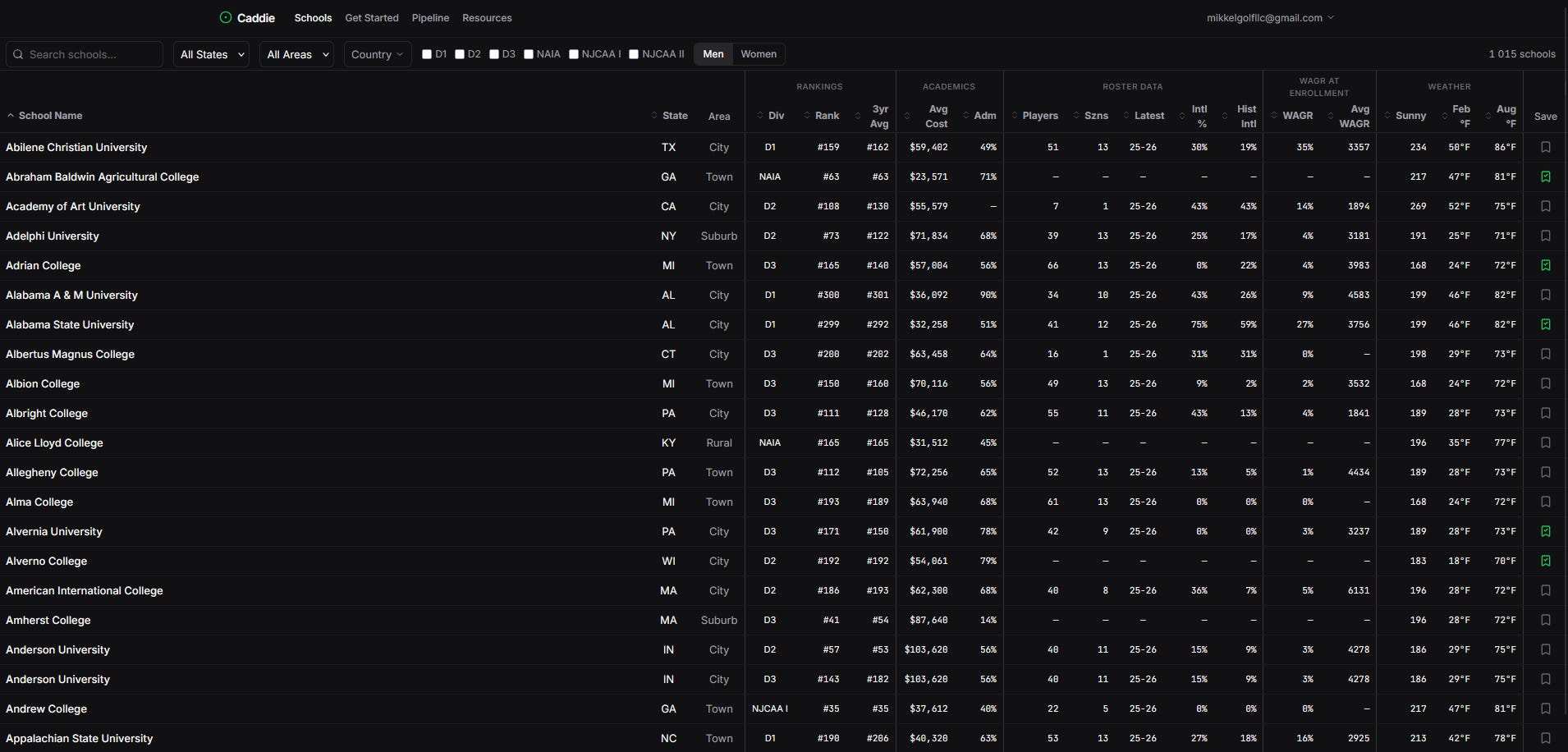
If you’re a family navigating the recruiting process right now, I also built CADDIE:
https://caddie.mikkelgolf.com
A complete recruiting system for you to own your recruitment - reviewed by me.

Coach at Vika Golf Club in Oslo. Former NCAA Division I coach at Texas Tech, Baylor and SFA, and former Baylor golfer.
Working on your own path to college golf?
Book a 2-hour first session. We go through where you stand, which programs fit, and how to contact coaches. In Oslo or on Google Meet, parents welcome.
Related articles
First published on the MikkelGolf newsletter on Substack.